Reported by Shreya Chakraborty, KICI TV News, July 14th, 2026
Tensions in the Middle East have reached a dangerous new flashpoint following an Iranian cruise missile attack on two United Arab Emirates-flagged oil supertankers in the strategic Strait of Hormuz. The strikes, which left one crew member dead and eight others wounded, occurred almost simultaneously as United States Central Command (CENTCOM) executed its third consecutive night of heavy airstrikes against targets inside Iran.
Deadly Missile Strike in Omani Waters
According to the UAE Ministry of Defence, the national oil tankers—identified as the Mombasa and the Al Bahiyah—were transiting the southern shipping lane of the Strait of Hormuz within Omani territorial waters when they were targeted by two Iranian cruise missiles.
The attack triggered intense fires on both vessels, causing significant material damage before crew members brought the blazes under control. The UAE military confirmed that an Indian national serving aboard the Mombasa was killed in the blast. Among the eight injured are six Indian nationals and two Ukrainian nationals, with four reportedly in critical condition.
In a strongly worded statement, the UAE Ministry of Foreign Affairs condemned the incident:
”This brazen attack constitutes a flagrant and serious violation of international law, directly threatening regional stability and global energy security. The state reserves its full right to respond to this escalation and to take all necessary measures to protect its territory, citizens, and national interests.”
Iran Claims Vessels “Ignored Warnings”
The Islamic Revolutionary Guard Corps (IRGC) later claimed responsibility for disabling the vessels, asserting through state media that the commercial ships had violated maritime regulations. The IRGC alleged that the tankers had deactivated their tracking systems and ignored multiple warnings from the Strait of Hormuz security control center.
Iranian authorities have been attempting to enforce a mandate requiring commercial shipping to use lanes closer to the Iranian coastline and request explicit permission from Tehran to pass.
In addition to the tanker strikes, Iranian forces launched retaliatory attacks targeting locations in Bahrain—home to the U.S. Navy’s Fifth Fleet—and Jordan, triggering missile defense sirens across several Gulf states overnight.
Washington Tightens the Noose
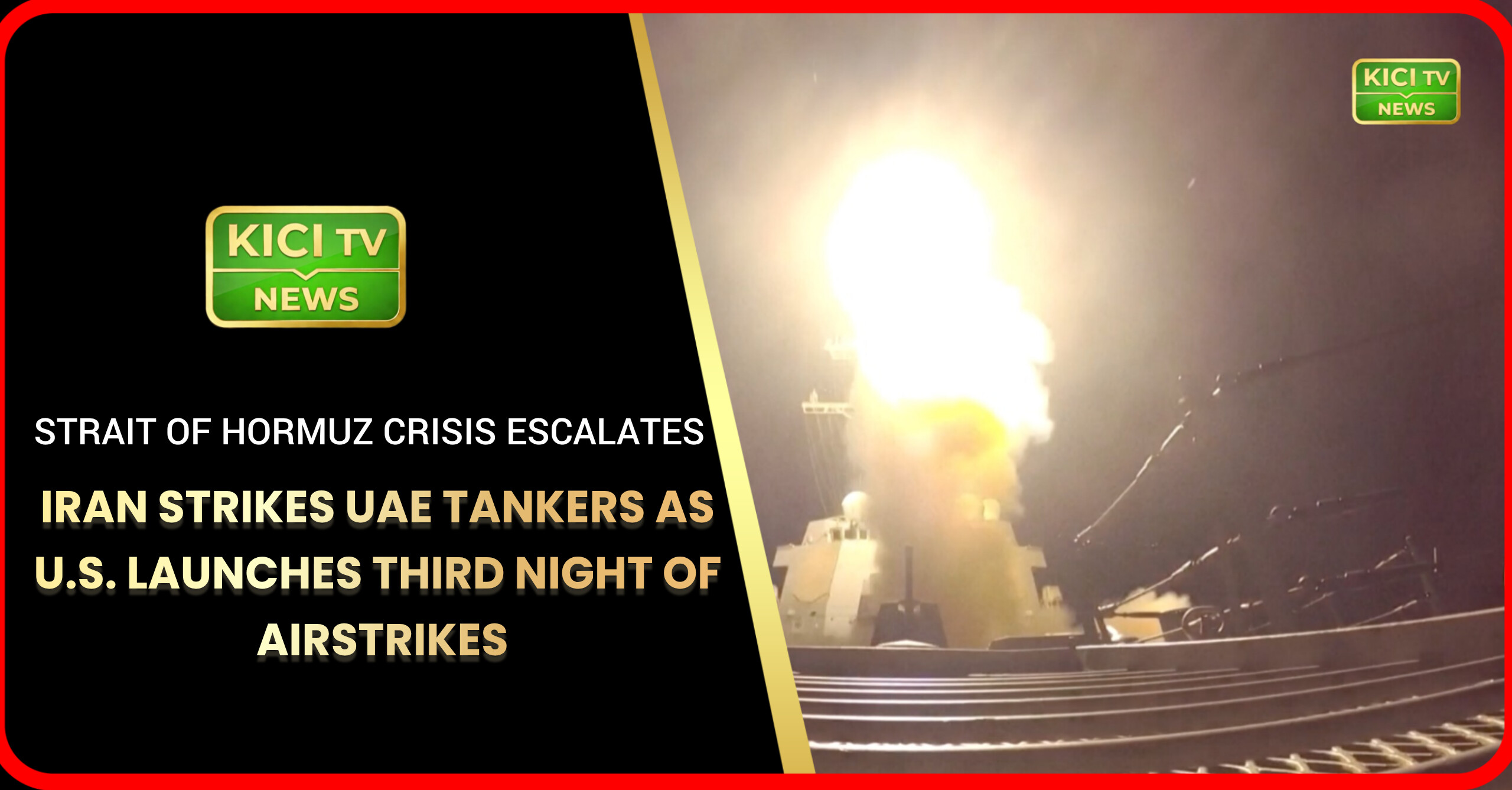
The naval flare-up followed a rapid succession of military actions ordered by Washington. On Monday evening, U.S. forces initiated their third straight night of bombardment aimed at degrading Iran’s offensive capabilities. CENTCOM stated that the operations are explicitly designed to diminish Tehran’s capacity to threaten civilian and commercial maritime traffic.
Speaking from the Oval Office, U.S. President Donald Trump reinforced the administration’s aggressive posture, announcing the reinstatement of a strict naval blockade on all Iranian ports. Furthermore, the President detailed plans to levy a 20 percent charge on eligible commercial cargo transiting the Strait of Hormuz to offset the soaring security costs incurred by the U.S. military.
”We are protecting a very rich portion of the world, and we are going to be reimbursed for that protection,” the President told reporters, warning that the U.S. military will continue to hit Iranian forces “very hard” if provocations persist.
Economic Fallout and Global Alarm
The sudden escalation has immediately rippled through global markets. Brent crude prices surged by nearly 2 percent to hit $84.87 a barrel within hours of the reported tanker attacks. Maritime experts warn that shipping insurance premiums are skyrocketing, threatening to disrupt global trade routes through a waterway that handles roughly a fifth of the world’s petroleum supply.
United Nations Secretary-General António Guterres expressed deep concern over the “serious escalation of renewed military confrontation,” urging all parties to exercise maximum restraint to prevent a full-scale regional conflict.
Reporting for KICI TV News , World News Desk.